When mobile apps became popular in the early 2010s, they revolutionized the way we use technology, and one area that wasn’t lost to mobile apps was fitness.
Before long, fitness apps populated the digital shelves and today, thanks to the latest advancements in AI, these AI fitness apps have risen to a new level.
The capabilities of AI fitness apps can rival those of a real personal trainer and in some cases even outdo them.
In this article, let’s take a look at the 7 benefits of using an AI fitness app.
What Are the Benefits of AI Fitness Apps?
AI fitness apps offer benefits such as personalized workout and nutrition plans, progress tracking with feedback, motivation enhancement, schedule optimization, cost savings, and access to supportive communities, all powered by machine learning and data analysis for a tailored fitness experience.
Let’s take a closer look at the many benefits of using AI-powered fitness apps and the impacts. If you’re a Personal Trainer, I apologize in advance! 😥
1. Better Track Your Progress
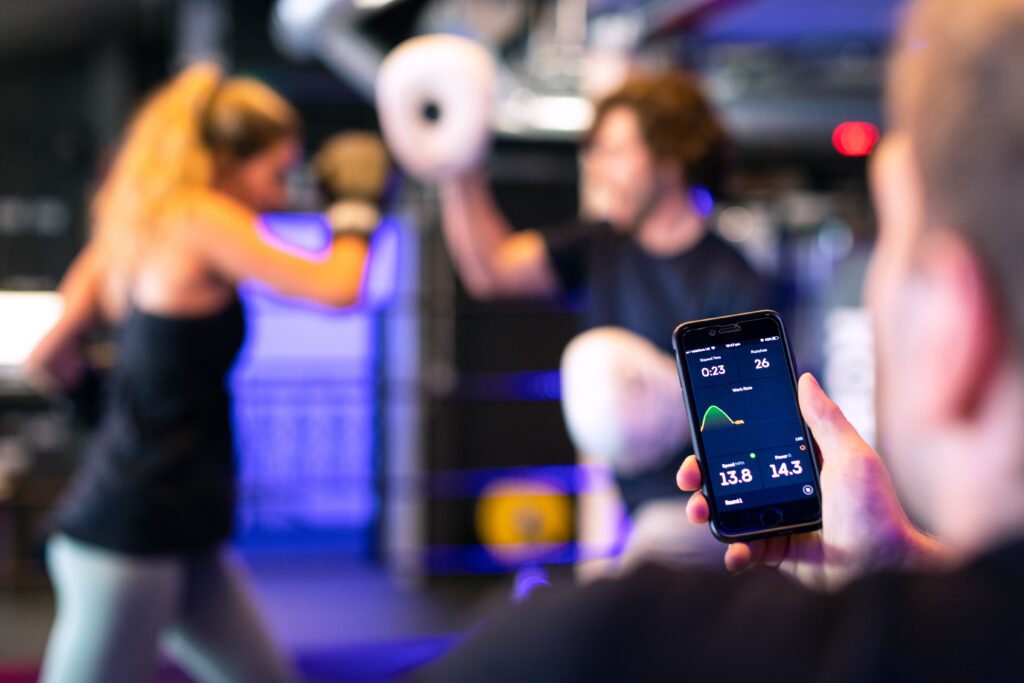
We’ve all seen the old-school guy in the gym walking around with a notepad and pen.
Tracking your progress isn’t anything new and is an important factor in hitting your fitness goals.
What sets AI fitness applications apart is that they leverage machine learning to analyze your progress and provide feedback, which can be invaluable for steady progression.
Not only this, but any one of the available AI fitness apps will provide a customized workout program based on your fitness levels and available equipment. Fitbod, for example, keeps track of which muscles are still recovering and picks your next workout around them.
2. Maintain Motivation
I don’t care who you are, sometimes we just don’t feel like getting it done (usually on legs day).
The beauty of using an AI fitness app is that it can actively help with motivation by giving some stats, a gentle reminder, or just some motivational words.
Natural language AI tools are scarily good at sounding human these days, and apps like WHOOP and Oura now have AI coaches you can chat with about your sleep, recovery and training. It’s like having a personal trainer in the palm of your hand.
Sometimes even the accountability of the app can help motivate you to the gym.
Plenty of people lose their motivation in the first few months of training. AI fitness apps can really help during this time.
3. Have Better Workouts

Personal trainers generally have a basic format for their workouts with only slight variations given to every client.
This isn’t necessarily a bad thing if you find a good PT, but unfortunately, there are a lot of bad PTs out there.
AI technology allows for the best workout program to be assembled given your goals, fitness level, and available equipment. Even a general chatbot can do a decent job; here’s how to make a workout plan with ChatGPT.
Furthermore, machine learning allows the AI to monitor fatigue levels and identify areas for improvement in your routine.
Finally, most products come with visual guides in the form of animations or videos on how to do the movements correctly, ensuring you have good form in the gym.
4. Get Nutritional Advice

Similar to workout routines, most PTs will have a generic nutritional plan they recommend to all their clients based on their current fitness levels and goals.
AI is rapidly transforming the health and fitness industry due to its ability to analyze massive amounts of data.
This gives AI-powered fitness apps a massive advantage allowing high levels of personalization and tracking for users. Evolve, for example, works out your calorie and macro targets and adjusts them over time.
Traditionally, getting this level of attention would be prohibitively expensive for most people.
AI fitness apps now put this capability in the palm of your hand. Just remember it’s general guidance, not a dietitian, so see a professional if you have a medical condition.
Another win for AI.
5. Save Money

If you’ve ever had personal training sessions you’ll know they can be expensive, especially if you’re looking to train with a PT a few times a week.
While a human personal trainer is still a good idea if you’re brand new to the gym, once you have the movements down with good form, an AI fitness app can be a great idea.
Comparatively, a year’s subscription to an AI fitness app costs about the same as one or two personal training sessions. Fitbod is $95.99 a year, while NASM puts experienced personal trainers at $50 to $100 or more an hour.
As these apps get better and better the same logic can be applied to nutritional advice.
6. Optimize Your Schedule
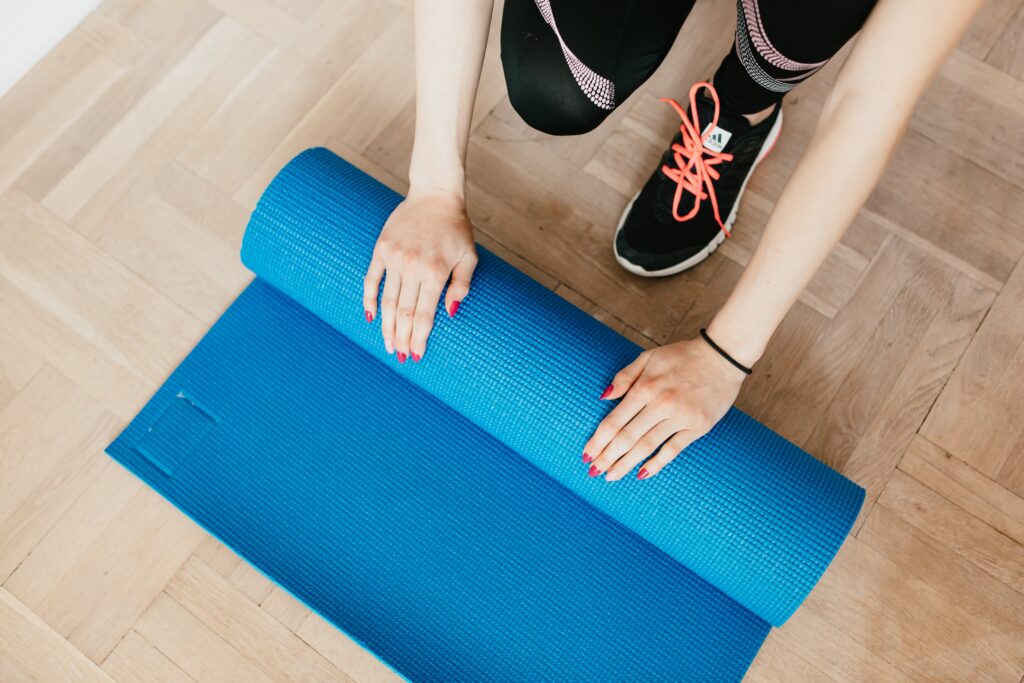
Everyone likes to train at different times.
Whether it be due to a busy schedule, or maybe you just like training at 5 AM, AI fitness apps allow users to train at a time that suits them.
Alongside this, AI apps can be taken anywhere, which makes them perfectly suited for outdoor calisthenics workouts, and cardio activities like running or cycling.
AI fitness apps can make a great fitness coach for those on the move.
7. Join a Community

Pretty much all the AI fitness apps on the market have an online community that users can access. Evolve runs a Discord, for example, and Freeletics talks up a community of 60 million athletes.
These communities are a great place to get advice on fitness equipment, strength training, or anything else fitness related.
Alongside this, being part of a community can be invaluable for maintaining motivation, and accountability.
Connecting with like-minded individuals with similar goals and aspirations is a powerful part of sticking to your routine and achieving your health and fitness goals.
What Types of AI Fitness Apps Are There?
AI fitness apps include mobile apps for comprehensive training programs, at-home apps for convenient workouts, and wearables for monitoring biometric data and optimizing training and recovery.
AI fitness apps aren’t strictly just mobile apps though, let’s take a look at the different types of AI fitness applications.
1. Mobile Apps
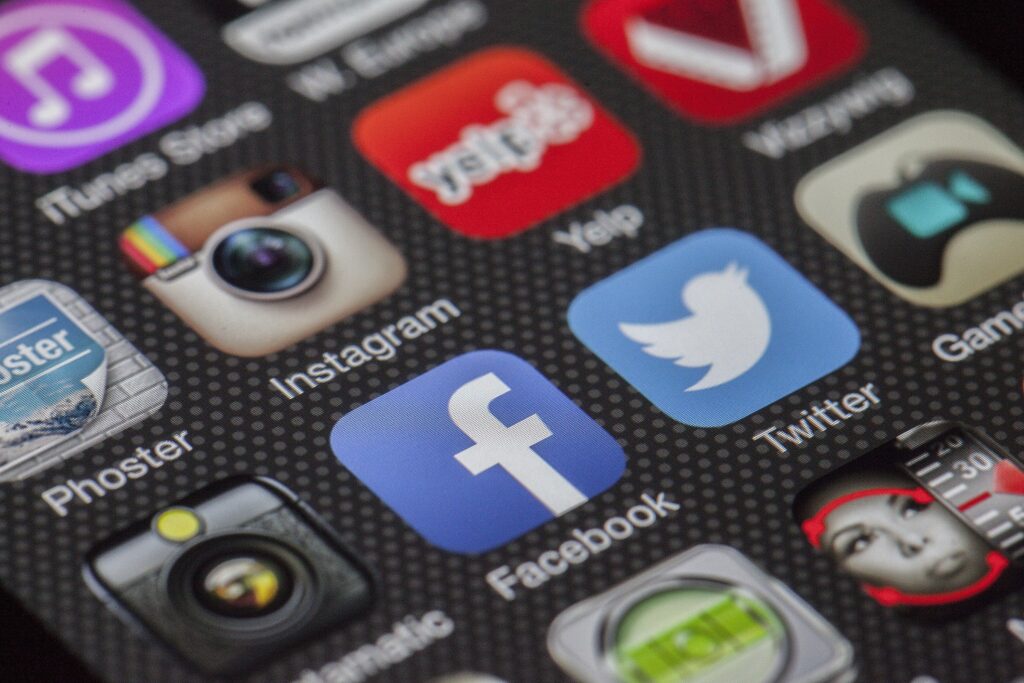
Mobile apps are generally what comes to mind when thinking about AI fitness apps.
Mobile apps are a great all-round tool for logging workouts, generating routines, getting visual guidance, and providing audio guides to workout to.
Mobile apps are the cheapest and easiest way to get started with AI-based personalized training programs and custom workouts.
2. At-Home Apps
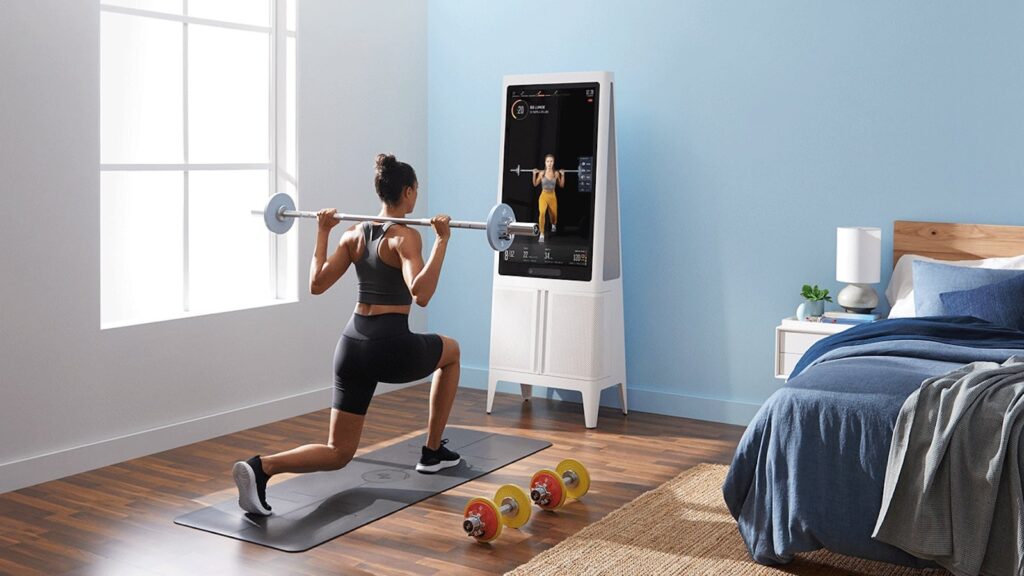
There is a range of AI workout products that are designed exclusively for use at home.
Tonal 2, for example, is a wall-mounted gym that sets the resistance for every rep ($4,295 plus a $59.95 monthly membership), while Tempo now sells virtual personal training from $39 a month, with home gym gear as an add-on.
These apps can be perfect for people that work from home, have young children, or don’t have a gym that is close.
Some of the at-home solutions are really innovative and are worth checking out if you find yourself dreading the busy gym.
3. Wearables
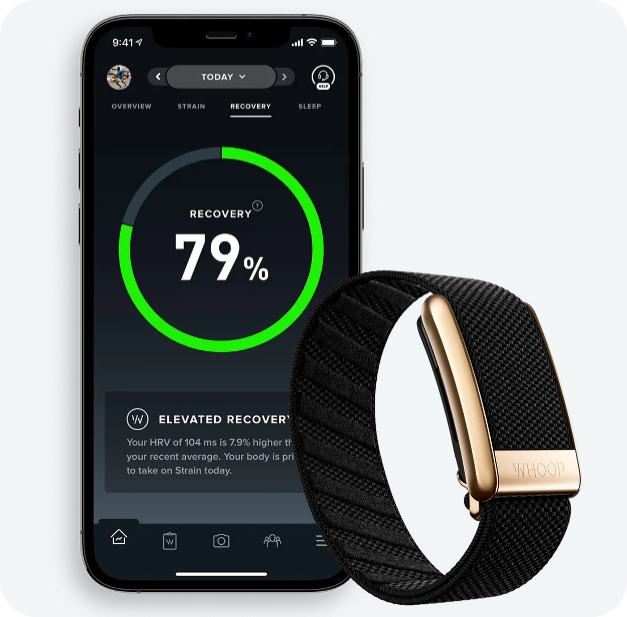
Wearables, such as fitness bands and smartwatches, monitor and record various biometric variables like physical activity, heart rate, sleep patterns, stress levels, blood oxygen levels, and more.
Most wearables can connect to the internet or Bluetooth and come with a mobile app where the data is reviewed and analyzed.
They’re getting their own AI coaches too. WHOOP Coach and Oura Advisor answer questions about your own data, and Apple Watch’s Workout Buddy gives you spoken pep talks mid-workout based on your heart rate, pace and fitness history.
Wearable devices can provide incredibly valuable data for anyone looking to optimize their training and recovery.
How AI Personal Trainers Are Changing the Game
The incorporation of Artificial Intelligence into fitness applications represents the dawn of a new era for personalized training programs.
These apps offer an array of personalized benefits that can’t be offered by legacy apps.
Everything from schedule optimization to nutritional advice, to just getting a better gym workout.
Whether it’s a mobile app, a home-based solution, or wearable tech, AI fitness apps cater to a range of preferences and needs.
They deliver a level of personalization and convenience that was previously only allowed by costly personal training sessions.
Ultimately, AI fitness apps are more than just a digital convenience; they are powerful tools that are able to maximize every movement and gym session you complete.